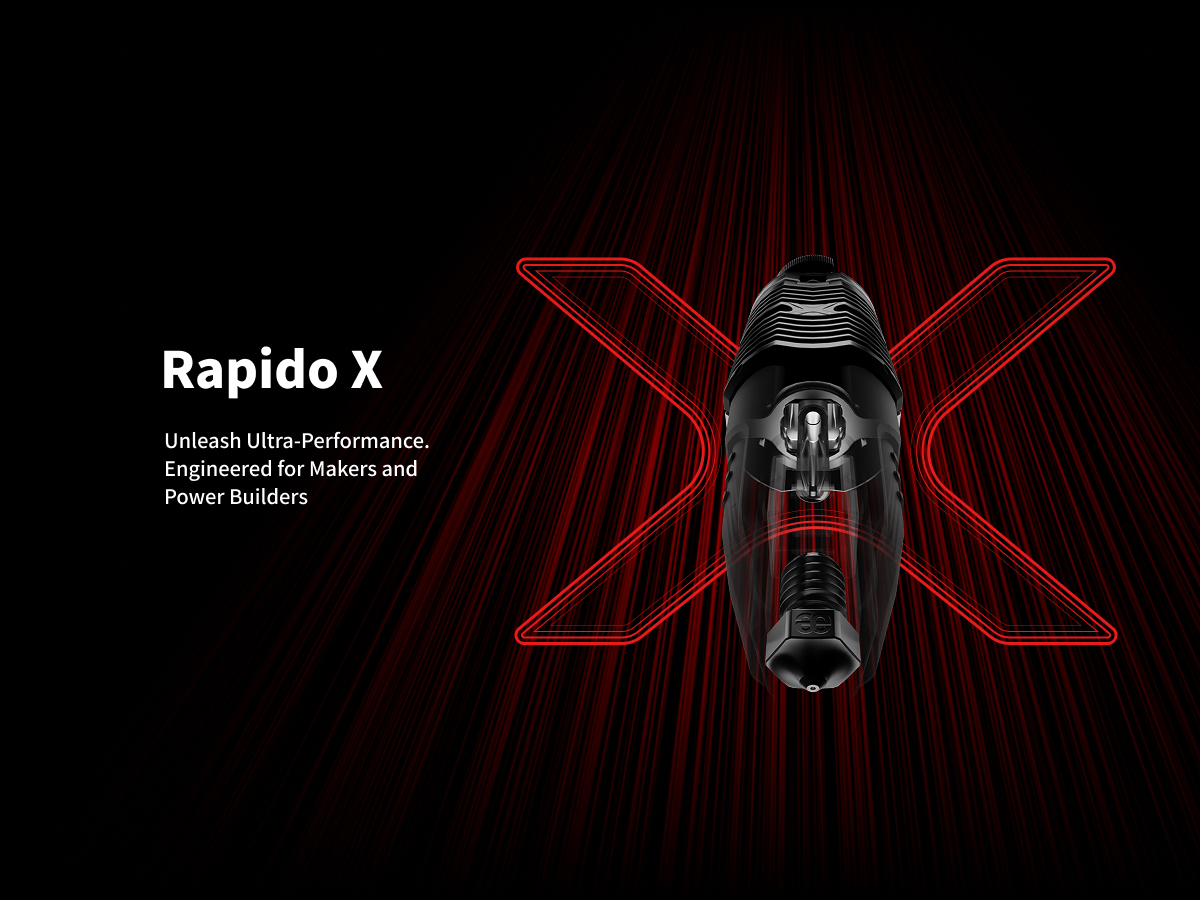
Rapido X is not simply another Rapido version with a more powerful heater. Phaetus has effectively redesigned the key hotend components around one goal: giving modern high-speed 3D printers enough melting capacity without sacrificing temperature stability, extrusion quality or the ability to print engineering-grade materials.
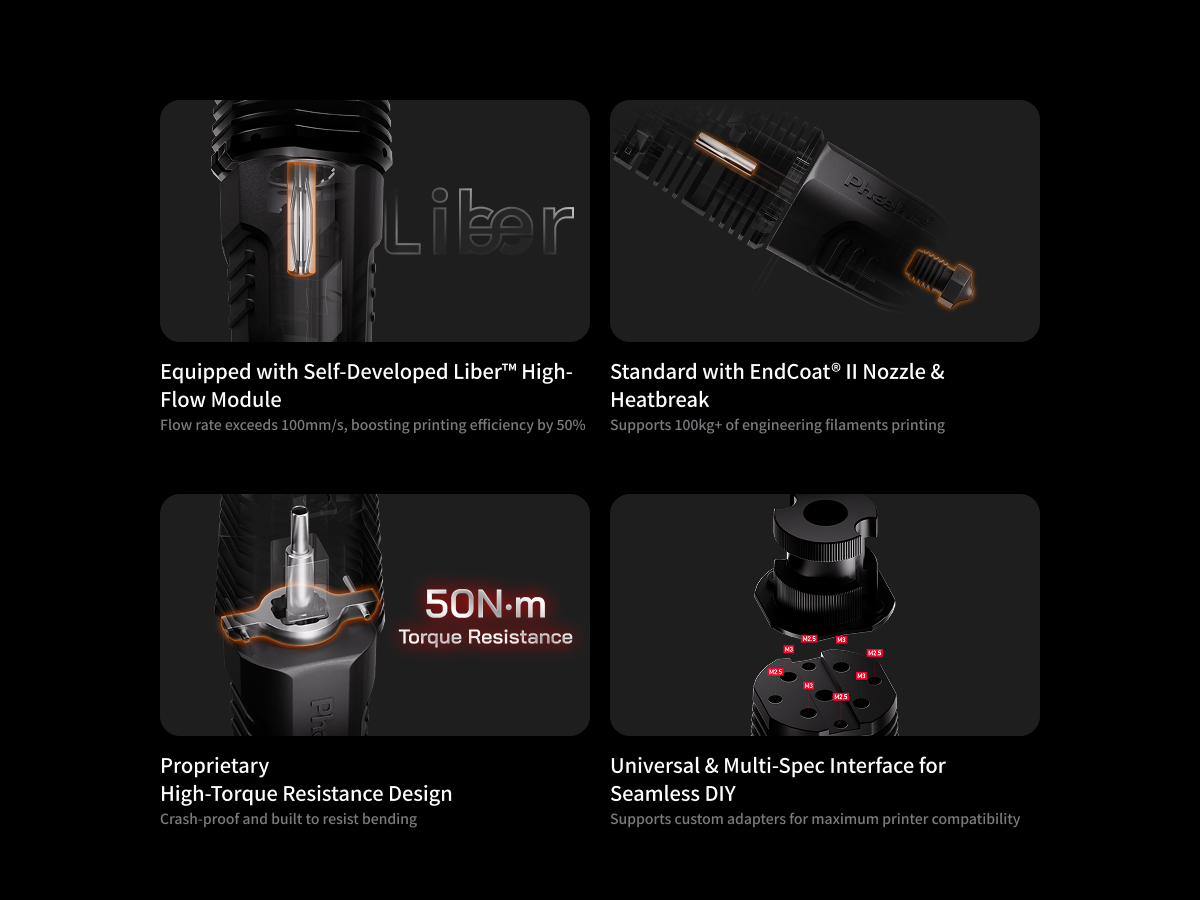
At the heart of the design is the new Liber™ High-Flow Module, which changes the geometry of the melting zone itself. Add a 120 W heater, PT1000, temperatures up to 350 °C, a replaceable M6 nozzle and the new generation of EndCoat® II wear-resistant coating, and you get a hotend designed for both high-speed and engineering-material printing.
What's New in Rapido X
Liber™: How Phaetus Rethought High-Flow
In a conventional hotend, increasing flow usually means extending the melting zone. It works, but the design quickly becomes longer, heavier and less suitable for high-speed motion systems.
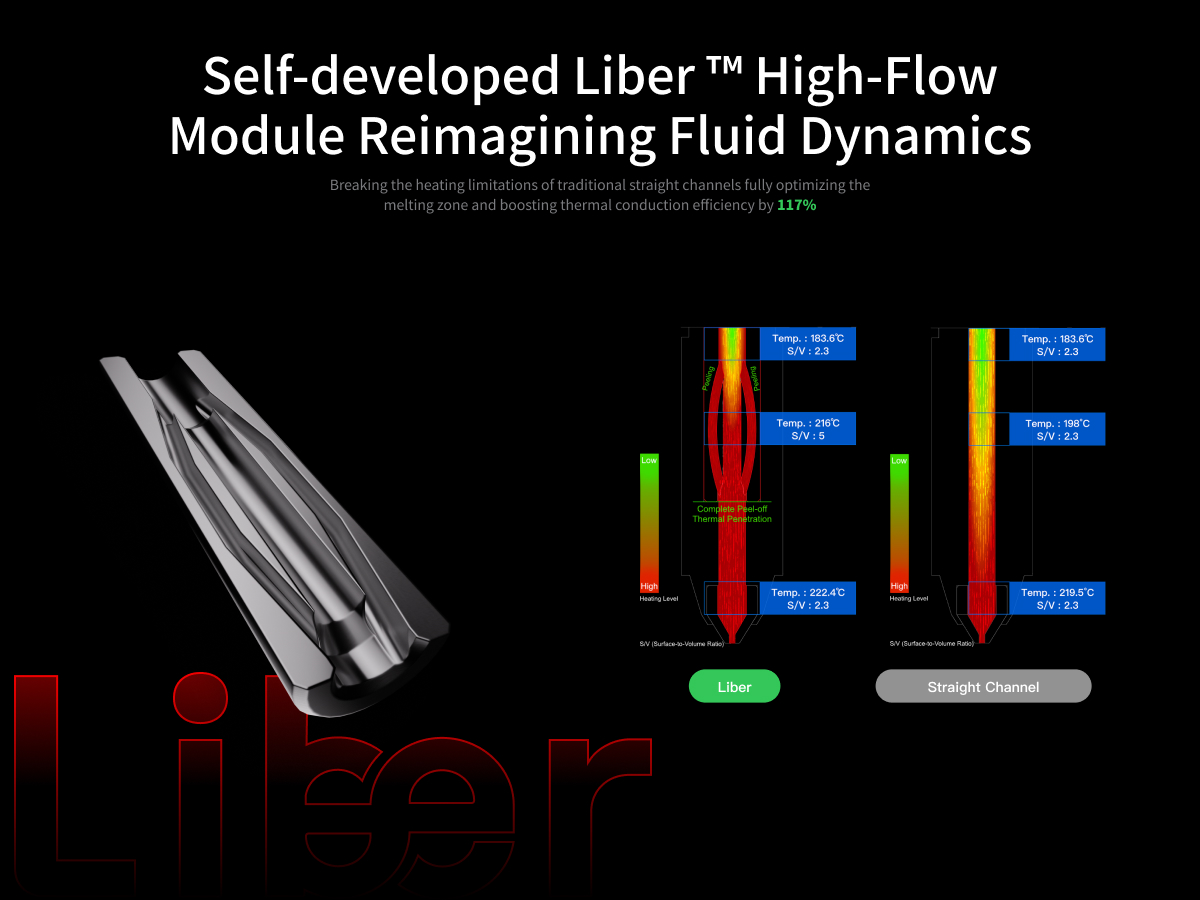
With Rapido X, Phaetus took a different approach. The Liber™ High-Flow Module uses a more complex material path and increases the effective heat-transfer area. According to the manufacturer, this design improves heat-transfer efficiency by 117% compared with a conventional straight channel.
100+ mm³/s: What Phaetus' Numbers Actually Mean
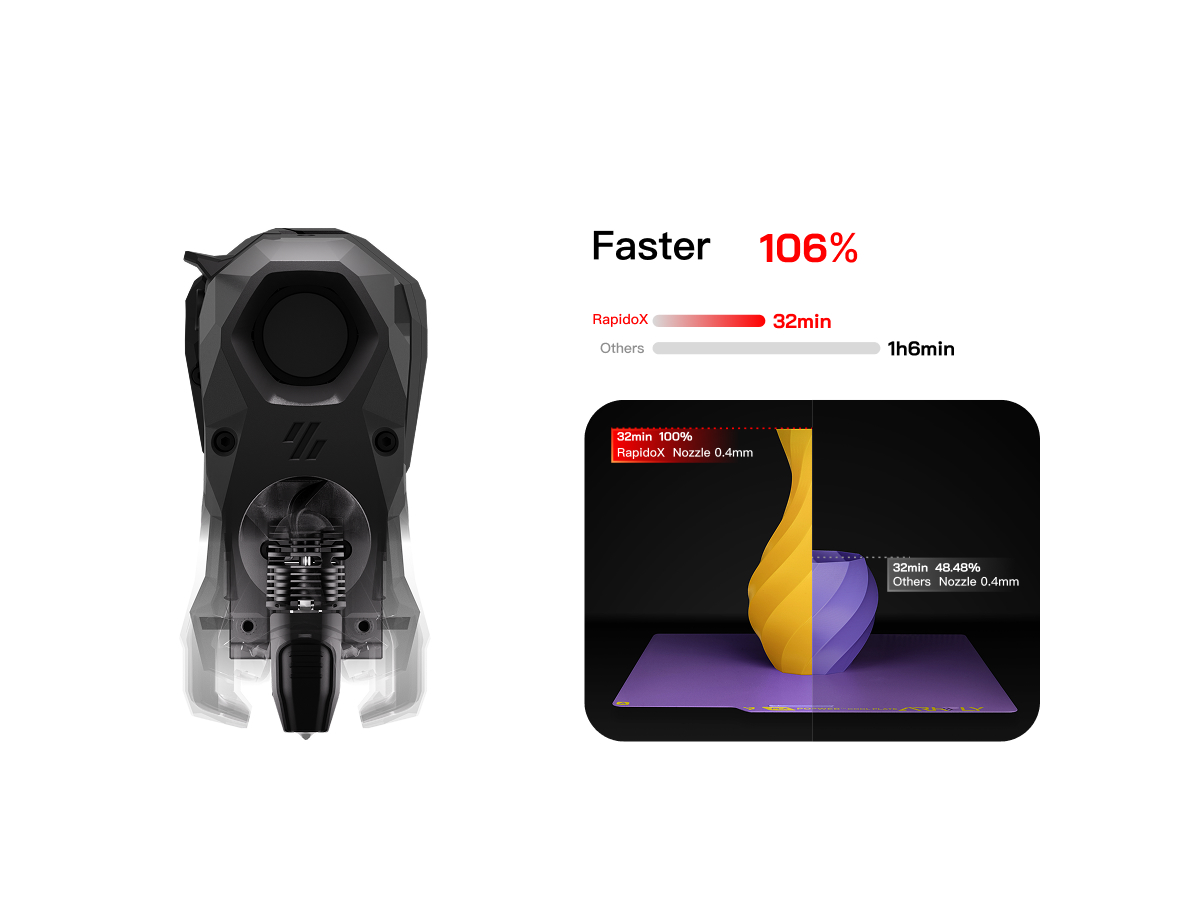
It's Not Just About Flow Rate
Volumetric flow alone means little if high-speed printing leads to under-extrusion, stringing or a sharp drop in surface quality.
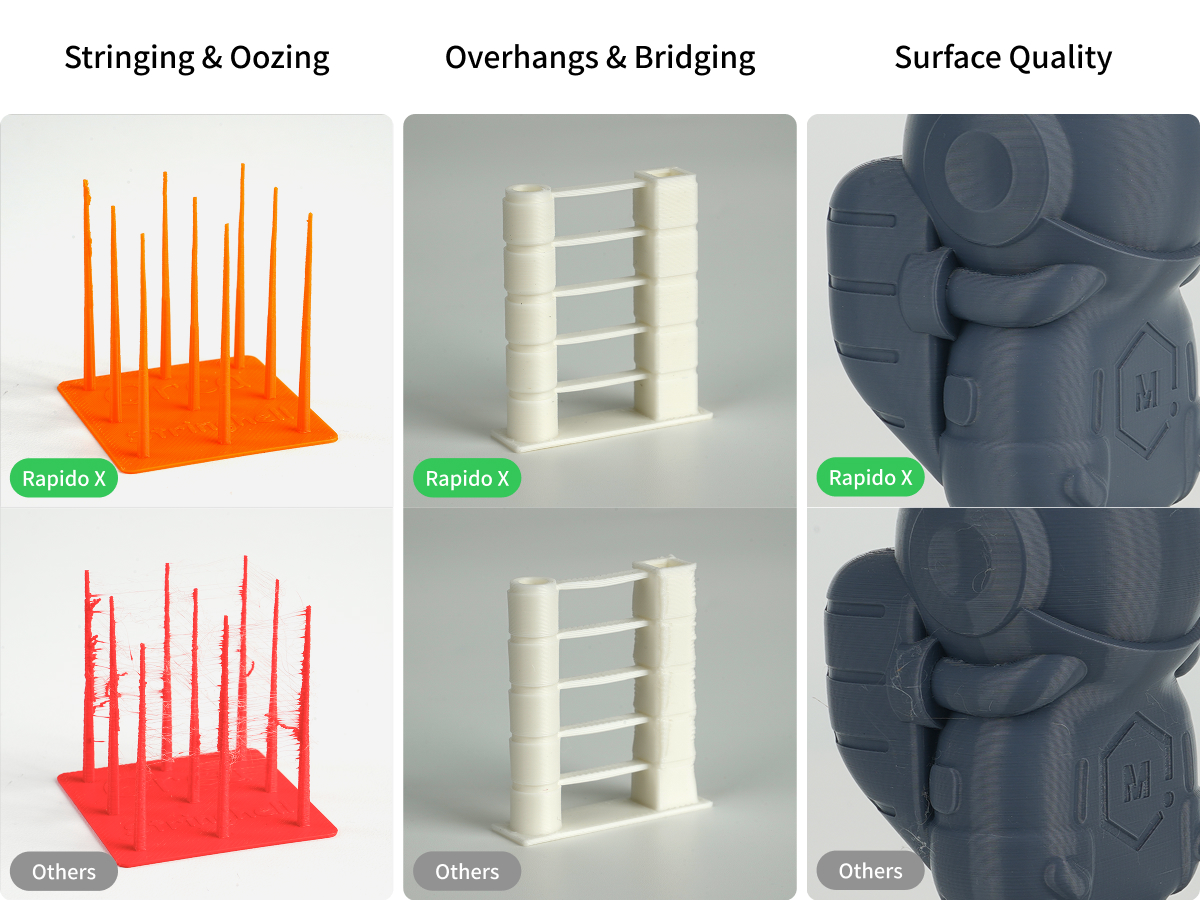
In Phaetus demonstration tests, Rapido X shows cleaner retractions, more stable bridges and smoother surfaces compared with a basic high-flow solution. The goal is therefore not simply to “push more plastic”, but to maintain controlled melting at high material throughput.
Cooling: Fighting Heat Creep
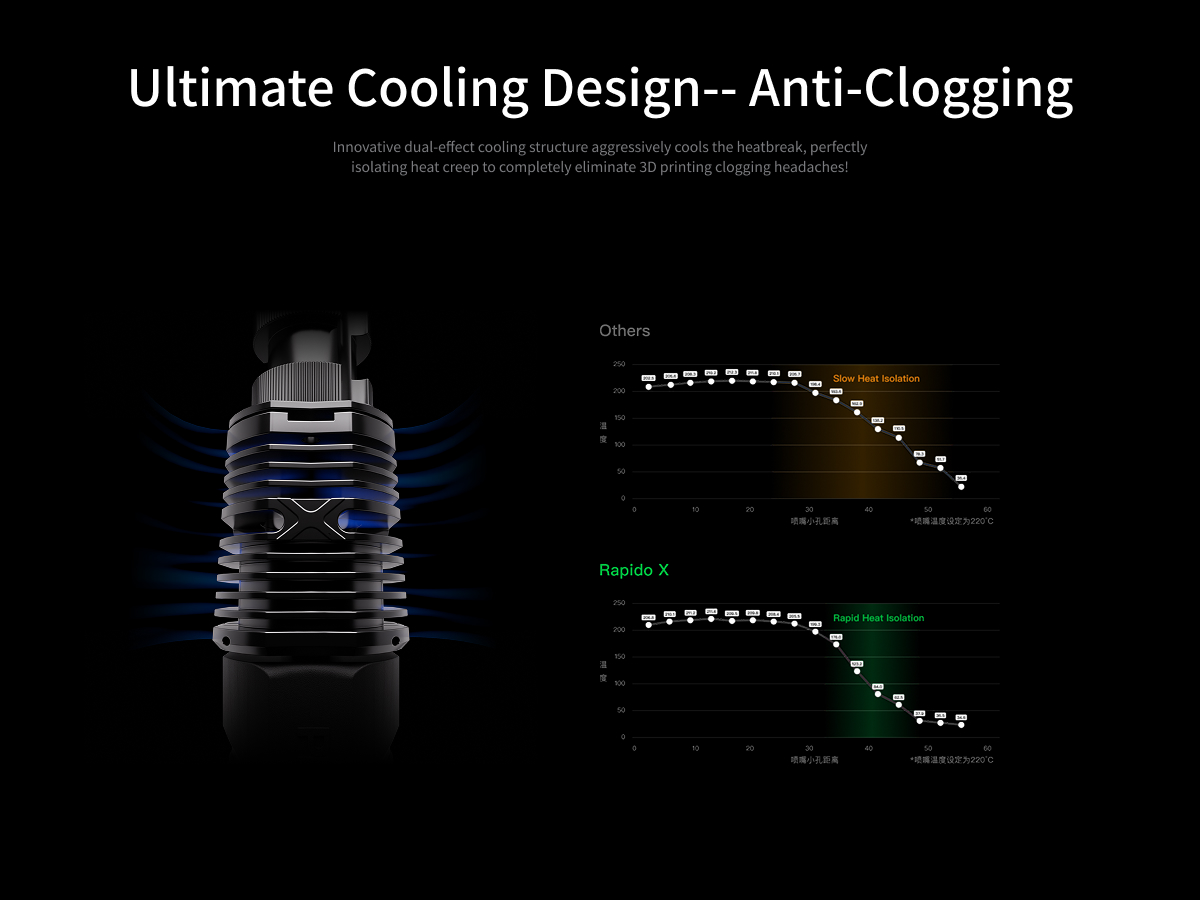
The more powerful the heating zone, the more important it becomes to isolate it from the cold side of the hotend. Otherwise, heat travels upward through the heatbreak, the filament begins to soften too early and the system develops classic heat creep.
Rapido X doubles the cooling surface area. Phaetus has also optimized the heatsink and heatbreak geometry to remove heat more efficiently exactly where it is no longer needed.
Micron-Level Manufacturing Precision
High flow depends on more than heater power and melting-zone geometry. The faster the filament moves, the more critical the internal bore accuracy, surface quality and precision fit between hotend components become.
For Rapido X, Phaetus specifies an internal heatbreak bore roughness of Ra ≤ 0.2 µm. The smooth internal surface promotes smoother filament feeding and reduces material buildup, while high-precision component mating helps minimize gaps that can cause melt leakage or clogging.

EndCoat® II and Composite Printing
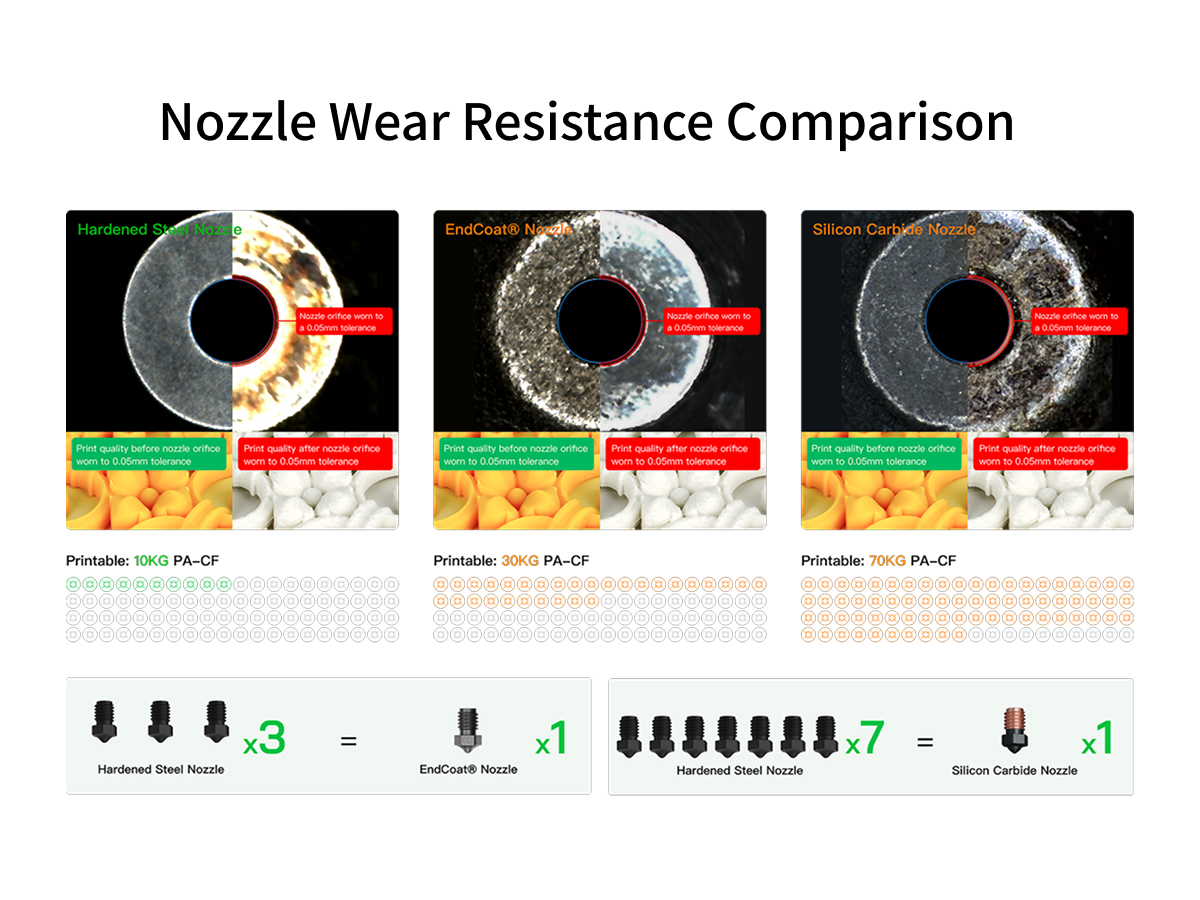
At high speeds, abrasive materials place even greater stress on the nozzle and internal filament path. This is why Phaetus places particular emphasis on its new-generation EndCoat® II coating.
Up to 350 °C: Not Just High-Speed PLA
Rapido X is equipped with a 120 W ceramic heater and a replaceable PT1000 sensor. Its maximum operating temperature is rated at 350 °C, so its application range extends far beyond PLA and PETG.
Important: the ability to heat the hotend to the required temperature does not automatically make the entire printer ready for PEEK or PEI. These materials also require suitable chamber and build plate temperatures, printer kinematics, properly prepared filament and other compatible system components.

M6 and a Universal DIY Platform
Phaetus has not locked Rapido X into a proprietary nozzle ecosystem. It uses a replaceable M6 threaded interface, while the mounting section provides eight open mounting holes: 4×M3 + 4×M2.5.

Reinforced Construction for High-Speed Motion Systems
At the speeds Rapido X was designed for, mechanical rigidity becomes just as important as heater power.
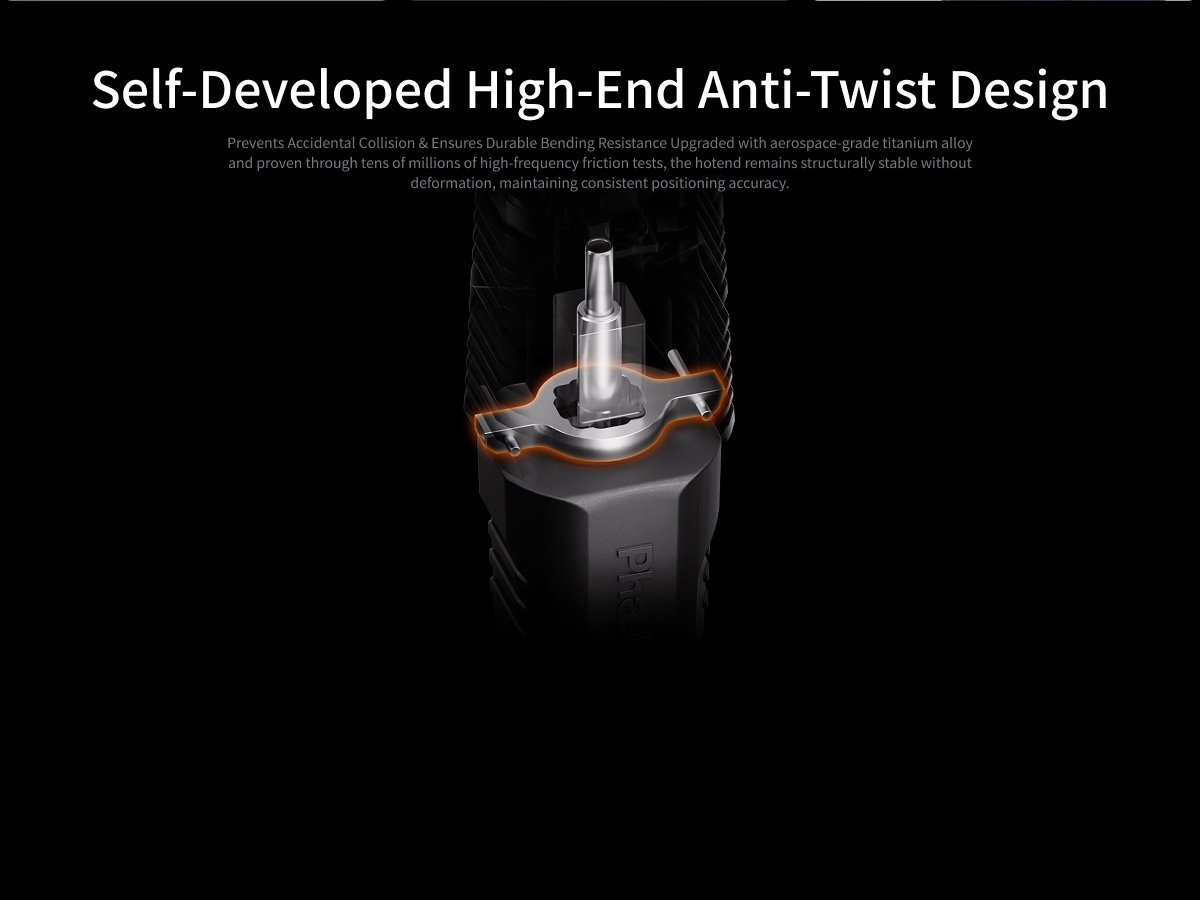
Phaetus uses its own anti-twist construction with titanium-alloy components. The manufacturer claims torque resistance of up to 50 N·m and separately tests the assembly for accidental collisions and repeated mechanical loads.
Technical Specifications
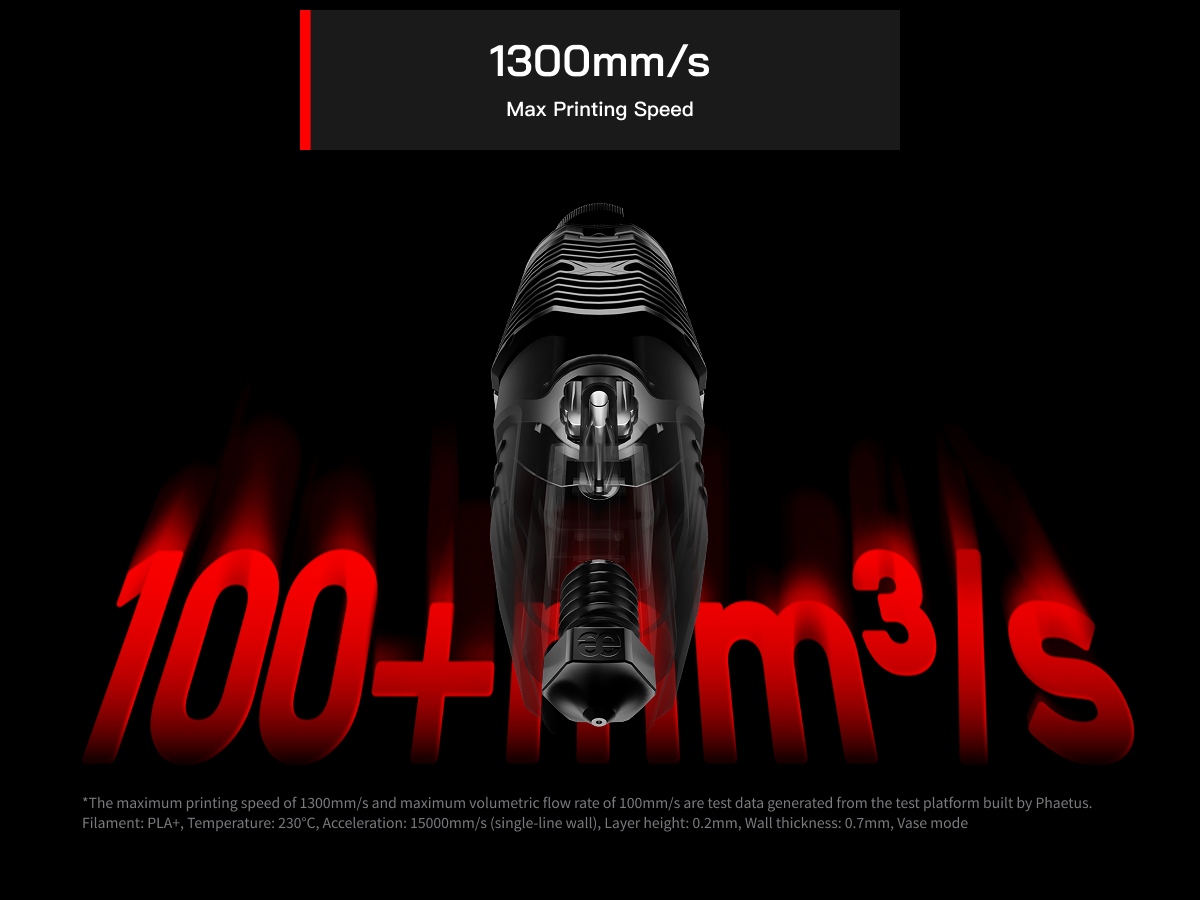
* Speed and volumetric flow figures are based on Phaetus test results and depend on printer configuration, material, temperature, nozzle and print settings.
Who Is Rapido X For?
Rapido X — a Hotend for the Next Generation of High-Speed Printers
Over the past few years, 3D printer motion systems have become so fast that the hotend itself is increasingly becoming the bottleneck. Simply using a longer nozzle or increasing the temperature is no longer enough.
What makes Rapido X particularly interesting is that Phaetus approaches the system as a whole: melting, cooling, mechanical rigidity, manufacturing precision, wear resistance, high-temperature capability and compatibility. That makes it far more than just another “high-flow hotend”.