


|
Quantity
|
Out of stock
|
||
|
|
|||
|
|
|||
Filament Dryers and Storage Boxes — Moisture Control for Reliable 3D Printing
Moisture is one of the most critical factors affecting FDM 3D printing quality. Many modern materials, including polyamides, TPU, PETG, PVA, and fiber-reinforced composites, gradually absorb moisture from the air. This can lead to bubbling, stringing, inconsistent extrusion, poor surface finish, and reduced mechanical performance of printed parts.
For this reason, controlling filament moisture is an essential part of both professional and hobbyist 3D printing. However, it is important to distinguish between drying filament and storing it properly — these are two different tasks that require different types of equipment.
Solutions for Filament Drying and Storage
The LFL3D catalog includes solutions for both stages of filament moisture management:
- filament dryers that remove accumulated moisture, restore material performance before printing, or keep filament dry throughout the printing process;
- airtight storage boxes that protect dried filament from reabsorbing moisture and provide proper storage between printing sessions.
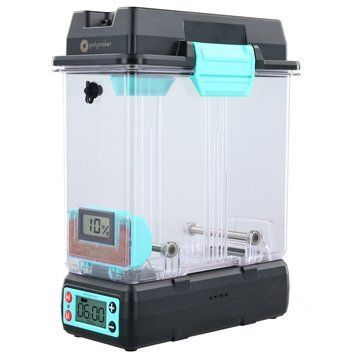
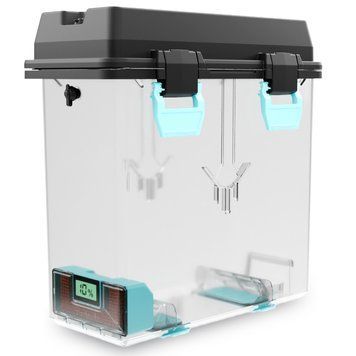
Our portfolio includes both conventional spool dryers and modern modular systems. For example, the Polymaker PolyDryer combines drying and airtight storage: the Dry Dock module is used to dry the filament, after which the spool remains inside the sealed PolyDryer Box, where it can either be stored or used for printing without being exposed to ambient air again. This approach is particularly convenient for users working with multiple materials.
Another category includes industrial systems such as Drywise, which operate on a different principle. Instead of drying the entire spool, these systems dry the filament immediately before it enters the extruder. This is especially beneficial for highly hygroscopic materials that quickly absorb moisture even after conventional drying.
For long-term filament storage, the catalog also features airtight storage boxes designed to maintain low humidity inside the container and preserve filament properties between printing jobs. This is particularly important when working with engineering-grade polymers.
LFL3D's Practical Experience
LFL3D works with a wide range of materials, from PLA and PETG to polyamides, composite filaments, and high-temperature engineering polymers. Our hands-on experience has shown that proper filament drying and storage often have just as much impact on print quality as printer calibration or slicer settings. That is why our team helps customers choose not only the right material but also the most suitable moisture control solution based on their equipment, operating environment, and the types of filaments they use.