


|
Quantity
|
Out of stock
|
||
|
|
|||
|
|
|||
PET — Practical and Wear-Resistant Filament for a Wide Range of Applications
PET (Polyethylene Terephthalate) is a versatile thermoplastic widely used in 3D printing due to its high strength, low moisture absorption, chemical resistance, and excellent interlayer adhesion. Unlike other basic materials, PET withstands loads better and has higher heat resistance, making it suitable for creating more functional and durable products.
PET Filament Variants
Pure PET is the base form without fillers. The material features high transparency, moderate flexibility, and good chemical resistance, making it ideal for printing food containers, transparent parts, or products with aesthetic requirements.
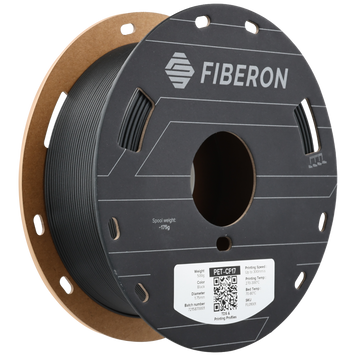
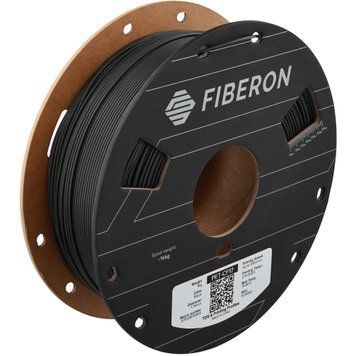
PET‑CF (Carbon Fiber Reinforced) is distinguished by improved rigidity, wear resistance, and dimensional stability. This filament is excellent for functional prototypes, housings, mounting elements, and any parts subjected to mechanical stress.
PET‑GF (Glass Fiber Reinforced) possesses even greater strength and heat resistance. This variant is most commonly used in technical or industrial tasks where shape stability is critical even at high temperatures.
Why is Reinforced PET More Popular?
- Easy and Stable Printing. Excellent adhesion to glass, PEI, and textured surfaces without additional agents.
- Flawless Interlayer Adhesion. Layers fuse tightly, ensuring high strength even with complex geometries.
- Minimal Shrinkage. Parts maintain accuracy and do not warp during cooling.
- Moisture Resistance. Unlike other engineering materials, printed products do not absorb water, do not soften, and do not lose strength.
- High Chemical and Thermal Resistance. They withstand mechanical loads and temperatures up to 120°C exceptionally well.
- Matte Texture of Parts. A uniform surface without the excessive roughness often found in carbon-filled plastics.
These filaments are ideal for functional prototypes, housing parts, load-bearing units, and technical elements in the fields of engineering, automotive, and robotics.
What to Watch Out for During Printing?
Despite the popularity and versatility of PET plastic, it requires careful printer setup to achieve consistent results. The extruder temperature should range from 230°C to 270°C depending on the material type, and the printer bed must be heated to 70–90°C for good adhesion and warping prevention. Keep cooling to a minimum or moderate level — excessive cooling can lead to delamination or poor interlayer adhesion.
It is especially important to use a wear-resistant nozzle for reinforced plastics, such as hardened steel or tungsten carbide. Carbon and glass fiber particles wear out brass nozzles extremely quickly, so cutting costs on this component will inevitably lead to print quality issues. Following these recommendations will help ensure a predictable and high-quality result. Order PET plastic at the Look-Feel-Live-3D online store. We offer only high-quality products from trusted manufacturers, which we test ourselves, so you can be confident in their quality and authenticity. LFL3D — your reliable supplier of 3D printing supplies!